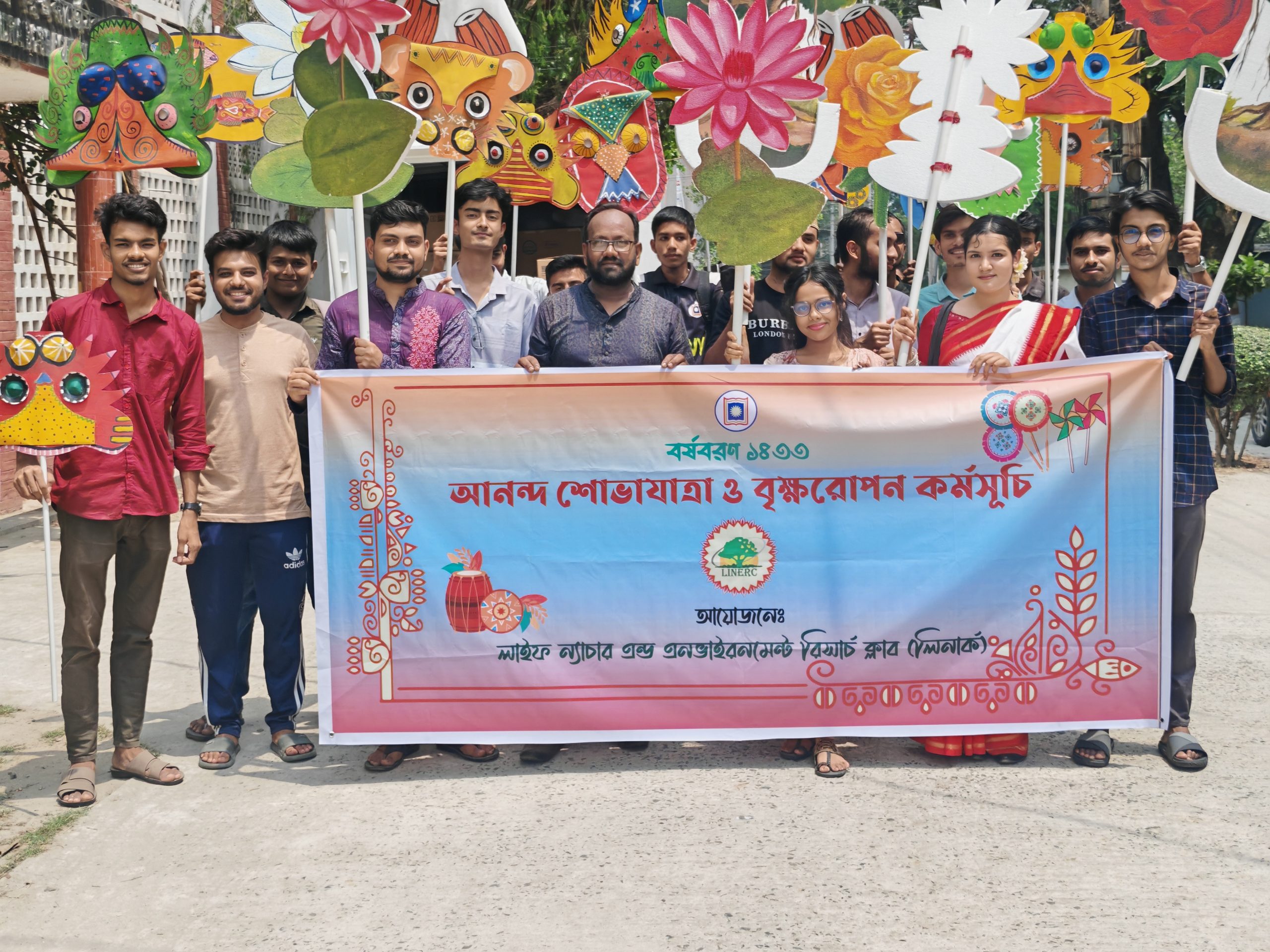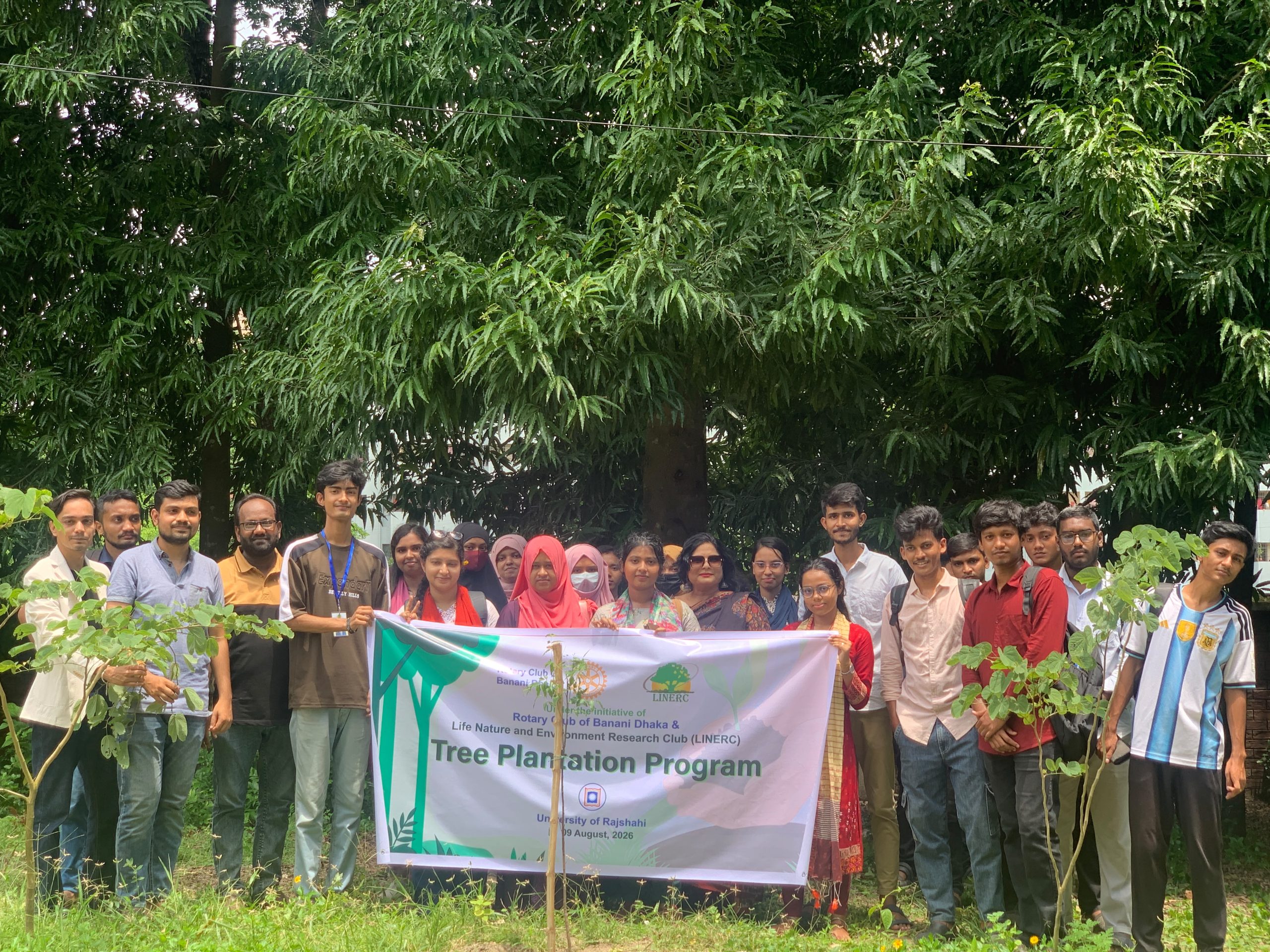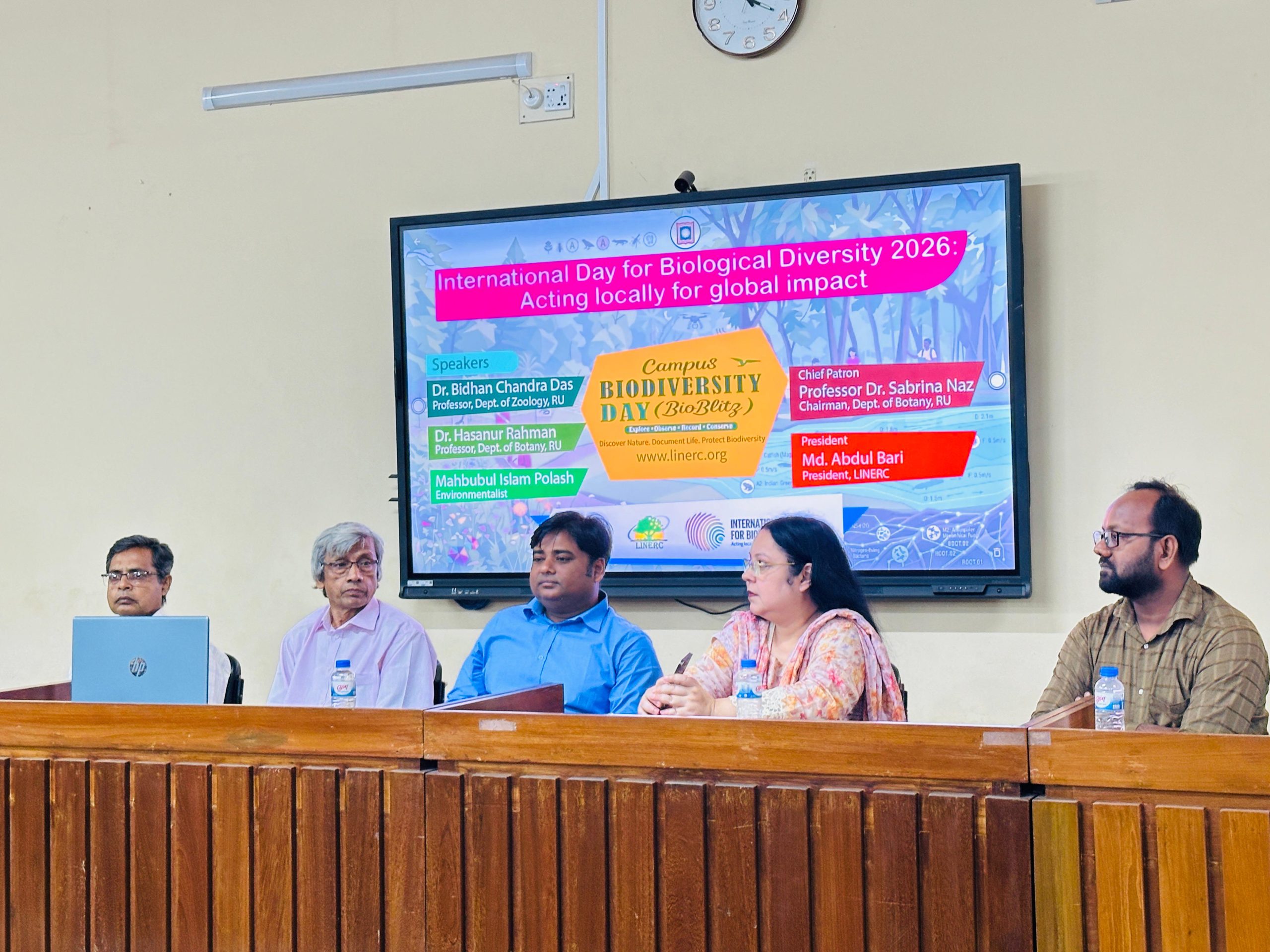
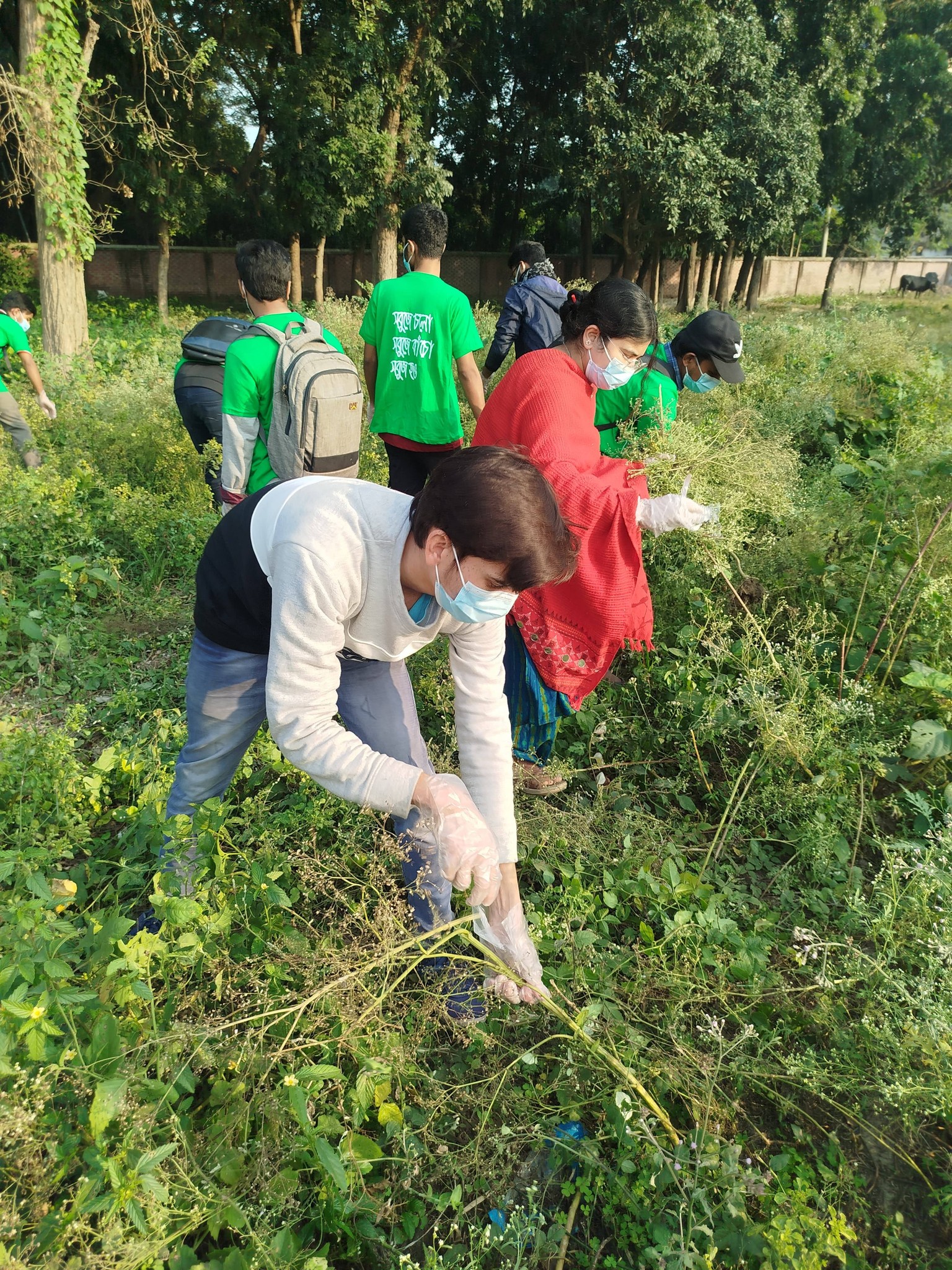
Harmful invasive plant Parthenium eradication program was launched at RU by the environmental organization LINERC. The program to remove the weed Parthenium, which is harmful to the environment and human health, was inaugurated in the presence of RU Deputy Vice Chancellor (Administration) Professor Dr. Mohammad Main Uddin and Student Advisor Professor Dr. Md. Amirul Islam. At the event, 70 environmental workers from LINERC removed the Parthenium plants for 5 hours. This environmental organization started its activities from 11 am and the Parthenium removal program continued until late afternoon. The program is being run under the overall supervision of the chief patron of the organization and the current president of the Botany Department of RU is Professor Dr. Sabrina Naz.
It is worth noting that each plant of this poisonous weed Parthenium is capable of producing 25,000 seeds in its lifetime. This plant is very harmful to human and livestock health, including the risk to local biodiversity. Due to the presence of this plant, the production of various food grains including seasonal crops decreases. The movement to remove Parthenium is very important for a safe environment.
This harmful weed is growing very rapidly in India and Bangladesh. The toxic substance “Parthenin” such as “sesquiterpene lactone” located in the flower petals of the weed is very harmful. Its particles can mix with the air and cause asthma and breathing problems in people. Those who have allergy problems should be more aware of exposure to Parthenium. Because if the sap of this plant is applied to their skin, it can cause cancer.
Eating Parthenium weed causes outbreaks of diseases such as ulcers in the mouth and digestive system, liver rot, etc. in buffaloes, horses, donkeys, sheep and goats. When cows eat this weed, ulcers appear in their intestines, and milk production decreases. Parthenium, when grown in cropland, reduces the yield of that crop. Its pollen disrupts the production of various types of vegetables like brinjal, tomato, and chili.
It also disrupts the process of nitrogen fixation in the soil. Therefore, this plant should be eradicated as soon as it is seen growing anywhere. It is necessary to raise awareness among the locals by conducting regular campaigns to remove this plant in different parts of Bangladesh, because many are not aware of its harmful effects.